
| 🧪 What does the paper actually show? |
| Claim: Hydrogel powder in situ, capable of effectively cooling systems |
| Fields of application: Industrial and electronic systems |
Introduction
Researchers at Zhejiang University were able to produce porous hydrogel powder in situ: after hydration, the powder transforms into a hydrogel coating that retains water, which evaporates while absorbing energy in the form of heat, thereby lowering the temperature.
It was tested in a solar panel cooling experiment with intermittent water spraying that reduced the temperature rise by 48% compared to conventional methods.
What is a hydrogel?
A hydrogel is a colloid (a liquid mixture containing solid particles in suspension, such as milk) formed by polymer chains (molecules with numerous bonds to carbon, hydrogen, and oxygen atoms) dispersed in water.
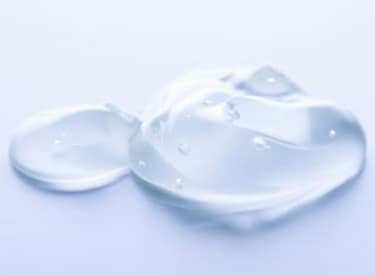
Its main characteristic is its ability to retain water molecules thanks to its highly hydrophilic polymer chains (high affinity for water). It can be designed to withstand specific pressures and mechanical stresses, depending on its intended use.
It maintains elasticity similar to that of natural tissues, and due to its biocompatibility, many hydrogel formulations are able to coexist with living tissue without triggering aggressive immune responses, making it particularly suitable for medical and cosmetic applications (e.g., tissue engineering, drug delivery, contact lenses).
Conventional cooling methods
Efficient thermal management is essential in industrial and electronic systems where high temperatures can reduce performance. The main conventional methods are: water-spray systems and hydrogel-based systems.
- Water-spray systems (for chips, power semiconductors, and servers in data centers etc.) rely on pumping systems that distribute a mist or a continuous spray of water over the surface of the solar panel; they are used to cool solar panels, improving their efficiency by 15% to 21%. However, the use of excessive amounts of water and electricity to power the pumping system makes this approach less desirable.
- Hydrogel-based systems are capable of retaining large amounts of water and gradually releasing it through evaporation, providing passive cooling without continuous energy consumption. A layer of hydrogel, often applied to the back of the solar panel, absorbs moisture from the air at night and releases it through evaporation during the day, cooling the panel.
Characteristics of Hydrogel Powder
The most important feature is that the powder-based hydrogel forms in situ—that is, the powder transforms directly into a hydrogel on the surface as it absorbs water, thereby overcoming the challenge of applying it evenly to complex surfaces.
It absorbs water very quickly and can store large amounts of water thanks to its polymer network. Evaporation and rehydration are processes that occur in rapid succession; they serve, respectively, to accelerate heat dissipation (and thus lower the temperature) and to replenish the water reservoir.
How they did it?
The hydrogel powder consists of powdered mixtures of poly (vinyl alcohol, CH2CHOH) (PVA) and tannic acid (TA, C76H52O46) in an aqueous solution of glutaraldehyde (GA).
Porosity is established through the bond between PVA and TA, further stabilized by the slow chemical cross-linking between GA and PVA.
A porous structure alone is not sufficient to ensure rapid water absorption, and the PVA-TA system described above is unable to absorb water quickly once dried; for this reason, a Superhydrophilic Powder (SP) has been incorporated.
SP creates pores within the structure that act as channels for water. This doubles the rate and capacity of water absorption compared to the unmodified PVA-TA system. Once hydrated, the SP powder dissolves and forms chemical bonds with the PVA and tannic acid matrix, anchoring itself firmly to the hydrogel network.
The importance of study
It is important to note that this powdered hydrogel forms in situ—that is, on the surface we want to cool—thereby overcoming the challenge of applying it uniformly to complex surfaces.
What sets this study apart is the use of a Superhydrophilic Powder (SP), which dramatically improves its performance compared to an unmodified PVA-TA hydrogel. It is of fundamental importance to reduce the excess water used industrially for cooling by employing a solution that requires less water.
Bibliographic sources:
- Lebin Shang, Jiayao Xu, Wenjun Peng, Jiayun Yu, Xiao Zeng, Jintao Cai, Chujun Ni, Qian Zhao. Powder-to-Hydrogel System with Fast Water Absorption for Evaporative Cooling. Polymer Science & Technology, 2026. DOI: https://doi.org/10.1021/polymscitech.6c00078
Read more on Green Chemistry:
Latest post: Lithium batteries: How to recycle them – theChemistry