| 🧪 What does the paper actually show? |
| Claim: Comparison of the Flash Joule method with other conventional methods |
| Fields of application: Graphene used in electronics, aerospace and automotive industries, wearable devices |
Introduction
Scientists examined the latest method for producing graphene (Flash Joule, a heating technique) to determine how much more—or less—efficient and sustainable it was compared to conventional methods, and also discussed the possible limitations of these methods.
What is Graphene and its Properties
Graphene is a two-dimensional allotropic form of carbon consisting of a single layer of carbon atoms arranged in a hexagonal pattern. There are several allotropic forms of carbon (diamond, graphite, graphene, fullerenes, nanotubes), and what distinguishes them from one another is the geometric arrangement of the carbon atoms and their chemical reactivity (ability to react).
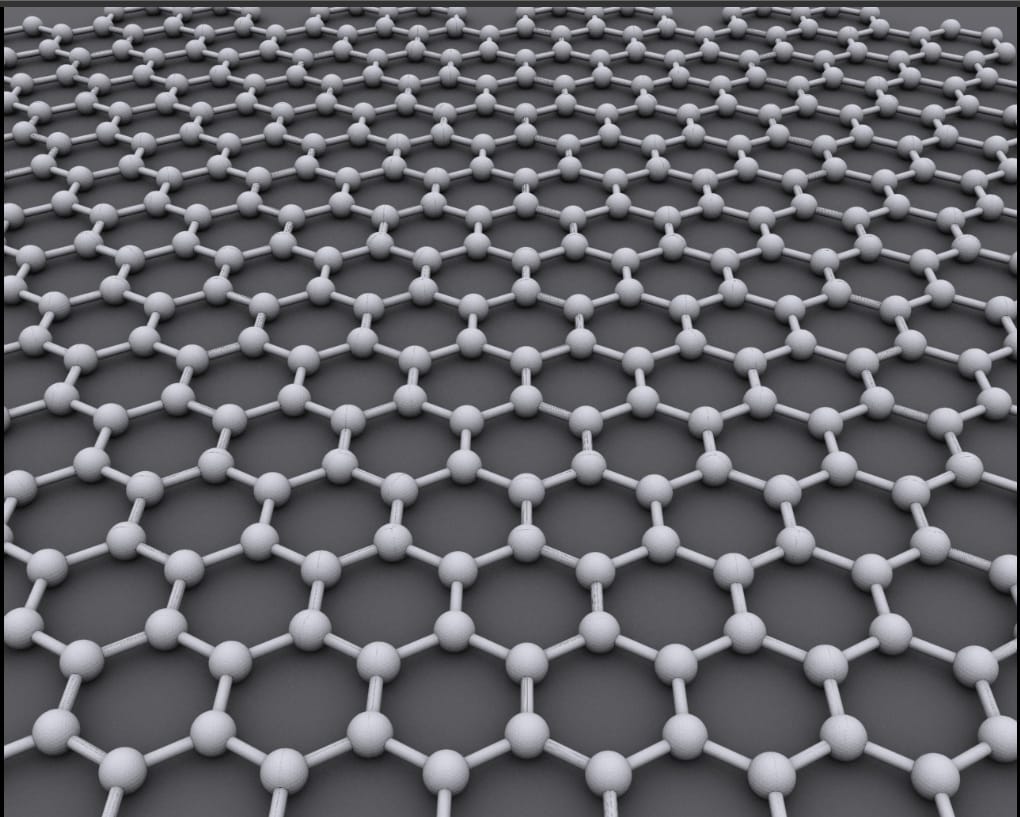
Its main properties are:
- Highly resistant to fracture and deformation
- High thermal conductivity
- The thinnest material in existence (a single atom ~0.142 nm lattice spacing, 1 nanometers = 10⁻⁹ meters)
- Gas permeability: practically zero (meaning it does not allow gas molecules to pass through) because its lattice is very densely packed with atoms
Where is Graphene used?
Thanks to its incredible thinness, it is chosen as a material for foldable screens and wearable devices such as headphones. In the aerospace and automotive industries, graphene can make airplanes and cars more efficient by reducing their weight and improving their mechanical strength. Graphene batteries charge faster and have a longer lifespan.
Producing graphene on an industrial scale, free of defects, and at a reasonable cost remains a challenge to be addressed because it requires advanced preparation methods capable of minimizing contamination of the carbon lattice, is a relatively new material that will be used more and more.
Conventional Production Methods
Chemical Vapor Deposition (CVD): A carbon-containing gas is used, which reacts on a heated metal substrate, where the carbon atoms assemble to form the hexagonal lattice of graphene. Advantages: cost-effective for large-scale production, high-quality graphene. Disadvantage: potential environmental impact and the need to regulate the gas used (e.g., methane).
Liquid Phase Exfoliation (LPE): The process begins with graphite (an allotropic form of carbon), and the goal is to separate its individual layers by applying energy. Advantages: low to moderate costs (uses solvents and mechanical energy, without requiring complex machinery). Disadvantages: average-quality final material, few layers, and defects, albeit moderate ones.
Salt Activation: Graphene oxide (GO) is heated with potassium nitrate (KNO₃) and metal chloride salts (LiCl/KCl) to a temperature of approximately 600 °C in a nitrogen atmosphere. Advantages: low cost (inexpensive salts are used) and high-quality, defect-poor final material. Disadvantages: moderate environmental impact.
Template Confinement: Graphene growth is confined within a small space (usually magnesium oxide, MgO) defined by a “template” material to control its growth. Advantages: high final quality. Disadvantages: moderate cost, potential environmental impact.
Flash Joule Heating Method
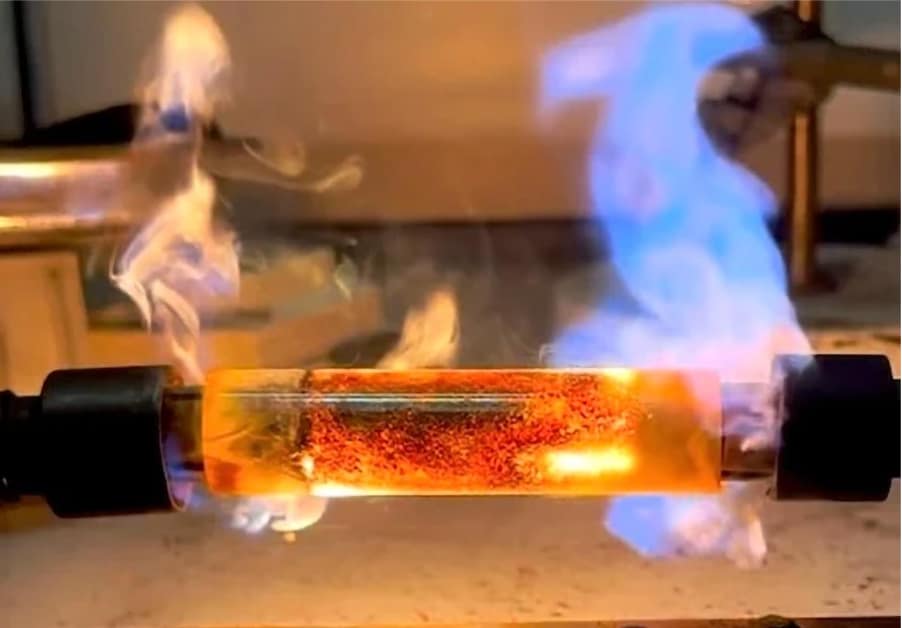
Thanks to the use of high-energy pulses, this method is capable of producing high-quality graphene from plastic waste and biomass in less than 1 millisecond (1 ms = 0.001 seconds), thereby reducing the environmental impact. In this study, the initial materials were 6H, 4B, and 14B pencils, each of which was subjected to electrical pulses of 0 V, 200 V, and 400 V. The pencil that produced the highest-quality, defect-free graphene was the 14B pencil lead at 400 V. The harder 6H and 4B pencils exhibited more defects in the final product.
Hydrogen is also obtained as a byproduct, and according to the paper, it is estimated that this method consumes 7.2 kJ/g of energy (kilojoules per gram) than other methods because the process involved is electrolysis (a process that uses electrical energy to bring about a chemical transformation), which requires less energy than conventional methods and uses less expensive catalysts (chemical species capable of accelerating the reaction by lowering the energy required for the reaction to occur).
Studies have shown that this method is the best technique in terms of energy efficiency, cost-effectiveness, and sustainability. Short-duration electrical pulses are applied to carbon waste, generating turbostatic graphene in just a few milliseconds (1 millisecond = 0.001 seconds) .
According to the paper, this method is chosen because:
- All the electrical energy is used for high-temperature processing (the atmosphere heats up to over 3,500 °C), and energy losses are minimized
- Low environmental impact
- Processing Speed
- Less expensive than conventional methods
Limitations of the Flash Joule Method
Although it is the best method, it is not without its flaws. The quality and quantity of the graphene obtained depend on the characteristics of the starting material. Materials that are rich in carbon and as free of impurities as possible are preferred. If an unsuitable material is used, the electrical pulses could weaken the graphene’s structure and reduce its quality.
Bibliographic sources:
- Nebechi Kate Obiora,Chika Oliver Ujah,Benjamin Nnamdi Ekwueme,Christian O. Asadu,Peter Apata Olubambi. Production of sustainable graphene and its derivatives through flash joule heating: A systemic review. Materials Science for Energy Technologies, 2026. DOI: https://doi.org/10.1016/j.mset.2026.01.002
Read more on Materials Chemistry:
Latest post: Diamonds: The ability to conduct electricity – theChemistry